


You know that feeling when you scroll through your bank statement and realise you’re paying for three streaming services you forgot about, a gym membership you haven’t used in six months, and a premium app subscription that renewed last week?
That sinking feeling in your stomach? That’s subscription fatigue.
This guide breaks down what subscription fatigue is, why it’s become such a widespread problem, and most importantly, how to take back control of your recurring payments without spending your entire weekend auditing bank statements.
What is Subscription Fatigue?
Subscription fatigue is the sense of overwhelm and exhaustion that comes from managing too many recurring payment services.
It’s not just about having multiple subscriptions-it’s about the cumulative mental burden of tracking, evaluating, and deciding what to keep or cancel.
Think of it this way: each subscription represents a decision you made in the past that now requires ongoing attention. Should you keep paying for it? Are you using it enough? Is there a cheaper alternative? Could you share an account with someone? Every subscription adds another item to your mental checklist.
According to a 2024 CNET study, US adults spend an average of $91 per month on subscriptions, but a 2022 study found consumers actually spend about $219 monthly - more than double what they think they’re spending.
This massive disconnect isn’t because people are bad at math. It’s because tracking subscriptions across different platforms, billing dates, and payment methods creates genuine cognitive overload.
The subscription economy has grown 600% over the past decade and is projected to reach $2.1 trillion by 2025. That explosive growth means more choices, more recurring payments, and inevitably, more fatigue.

The Psychology Behind Subscription Fatigue
This isn’t just a financial problem. It’s physiological.
Subscription fatigue is rooted in well-documented cognitive phenomena that affect how our brains process too many choices and ongoing commitments.
Decision Fatigue
Every subscription requires multiple decisions. Should I sign up? Which tier? Do I still need this? Cancel now or wait?
Your capacity for quality decisions depletes throughout the day.
Research on judges found they granted parole 65% of the time early in the morning but nearly 0% by late afternoon. After a food break? Back to 65%.
The judges weren’t cruel. They were cognitively depleted.
The same thing happens with subscriptions. You’re already making thousands of decisions daily. Evaluating whether your $9.99 fitness app subscription is worth keeping becomes one decision too many.
So you don’t decide. You let it auto-renew. Again. And again.
Cognitive Overload
Managing multiple subscriptions means tracking different billing dates, navigating various platforms, and remembering login credentials.
This constant mental juggling creates cognitive overload.
When cognitive overload hits, your brain takes shortcuts. You ignore subscription emails. You stop checking bank statements. You develop what psychologists call “decision avoidance.” Ultimately, you stop making decisions about subscriptions.
The Paradox of Choice
The subscription economy promised convenience and choice.
But research shows that too many choices actually decrease satisfaction and increase anxiety. When you have 15 different streaming services to choose from, five meal kit options, and dozens of software subscriptions available, the abundance becomes paralyzing.
This explains why 42% of subscribers feel they have too many streaming subscriptions, even though each individual service seemed like a good idea when they signed up.
More options don't create more happiness. They create more stress.
Why Subscription Fatigue Is Getting Worse
If you feel like it’s gotten worse over the past few years, you’re not imagining it.
Subscription Sprawl
Everything is becoming a subscription.
Software that used to require a one-time purchase now demands monthly payments.
Features that were previously free are locked behind subscription tiers. Car manufacturers are experimenting with subscription-based heated seats.
This means consumers allocate a growing portion of their budgets to recurring payments or risk missing out. The average consumer now holds 5.6 active subscriptions, with 32% reporting subscriptions represent over half their discretionary spending.
Price Increases
Netflix. Disney Plus. Spotify. Paramount Plus. They’ve all been raising prices.
A 2024 study found that two-thirds of US adults reported at least one subscription had increased in price over the past year. These increases compound subscription fatigue because they change the value calculation.
Content Fragmentation
Remember when Netflix had everything?
Those days are gone. Now, content is spread across Disney Plus, HBO Max, Paramount Plus, Peacock, Apple TV Plus, Amazon Prime Video, and countless other platforms.
Want to watch specific shows? You need multiple subscriptions. This fragmentation increased subscriptions per person from 2.4 to 3 in streaming alone - a 25% increase driven by platforms restricting password sharing.
Difficult Cancellation
Many companies deliberately make cancellation harder than signing up.
You can subscribe online in 30 seconds. But cancelling? That requires calling during business hours. Navigating retention offers. Filling out multiple forms.
This friction increases subscription fatigue by raising the cognitive and time cost of management. When cancellation feels like a hassle, you’re more likely to keep paying for services you don’t want.
The Free Trial Trap
Free trials are designed to convert to paid subscriptions, and they are remarkably effective.
Companies can boost revenue by up to 200% from customers who forget to cancel free trials. Those forgotten trials add to subscription sprawl, with many people discovering they’re paying for services they never intended to keep.
Signs You're Experiencing Subscription Fatigue
Are you dealing with it? Here are the warning signs:
- You can't name all your active subscriptions
- You discover charges for services you forgot about
- You feel overwhelmed thinking about which subscriptions to cancel
- You avoid checking your bank account
- You're paying for multiple services with similar content
- You keep meaning to cancel but never do
- You feel guilty about not using what you're paying for
- You've lost track of which emails are attached to which services
- You experience decision paralysis when considering new services
- You spend leisure time managing subscriptions instead of enjoying them
Recognize three or more? You're experiencing subscription fatigue. The good news? It's fixable.
How to Overcome Subscription Fatigue
It feels overwhelming, but it’s solvable.
Here’s a practical step-by-step approach to regaining control.
Step 1: Get Complete Visibility
You can’t manage what you can’t see. The first step is identifying every active subscription.
You can manually check your bank statements or search your email for “subscription” and “receipt”. However, while this approach is correct, it’s time-consuming and prone to errors. And honestly, just thinking about it gives you subscription fatigue.
The easier solution? Chargeback.
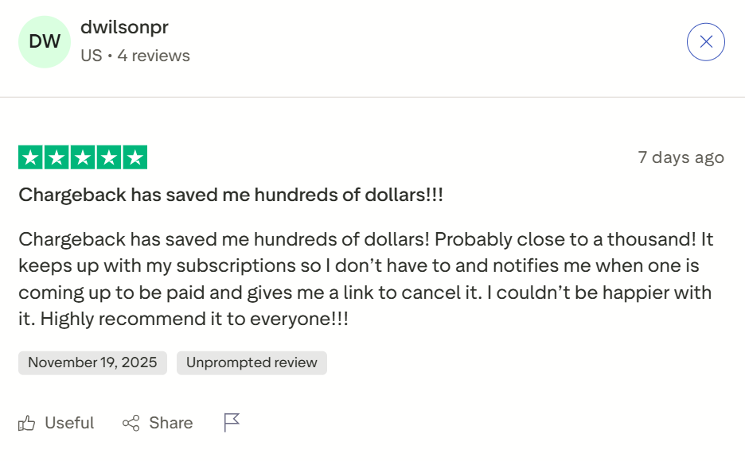
Chargeback’s AI agents automatically scan your email and accounts to identify every recurring charge. This means you don’t need to hunt for this information; the AI does the grunt work for you and provides all the information in one place so you have a complete view of your unwanted subscriptions.
Step 2: Evaluate Each Subscription Honestly
Once you know what you’re paying for, evaluate with these questions:
- Have I used this in the last 30 days?
- Does this provide unique value I can’t get elsewhere?
- Would I miss this if it were gone tomorrow?
- Am I paying for a higher tier than I need?
Be ruthless. If you’re paying for something you don’t actively use or value, cancel it.
Step 3: Cancel Strategically
Cancelling subscriptions manually is tedious. You navigate to each service’s account settings, finally find the cancellation option, and either face a ton of retention tactics, or you simply can’t trigger the cancellation.
Chargebacks’ AI handle this automatically. You select which subscriptions to cancel, and the AI manages the entire process. From navigating cancellation flows, handling retention offers, and confirming cancellations.
Step 4: Automate Subscription Management
The reason subscription fatigue is so exhausting? Managing subscriptions manually requires constant attention.
Automation removes that burden.
Chargeback’s AI continuously monitors your subscriptions, automatically detecting new free trials and recurring charges. You get 24-hour reminders before free trials convert to paid subscriptions.
The Future of Subscriptions
Businesses that relied on passive engagement and forgotten subscriptions are seeing that strategy backfire.
Research shows 67% of consumers now prefer usage-based pricing over flat recurring fees, citing it as fairer and aligned with actual consumption.
This preference signals a fundamental shift.
As of 2025, 39% of global subscribers planned to cancel at least one subscription within the next year. 54% cited content issues. 43% felt they spent too much.
This isn’t a temporary trend. It’s a recalibration of the subscription economy.
Take Control of Your Subscriptions
Subscription fatigue is real. Expensive. Exhausting.
But it’s also completely fixable.
You don’t need to become a subscription management expert or spend every weekend auditing bank statements. You just need the right tools and a clear strategy.
Chargeback eliminates the cognitive load of subscription management by automatically tracking every recurring charge across your email and financial accounts. You see everything in one unified dashboard.
The AI monitors free trials. Sends reminders before renewals. Can even cancel unwanted subscriptions automatically.
Over $30 million saved for customers. More than 15,000 subscriptions tracked. Less than an hour average cancellation time.
These aren’t just numbers. They represent real people who took back control.
Stop letting subscription fatigue drain your bank account and mental energy. Find out what exactly you’re paying for. Cancel what you don’t need. Automate the rest.
Try Chargeback now and eliminate subscription fatigue for good.
FAQs about Subscription Fatigue
What causes subscription fatigue?
Cognitive overload from managing too many recurring services. Decision fatigue from repeatedly evaluating subscriptions. Financial stress from accumulated costs. The mental burden of tracking different billing dates and platforms.
How many subscriptions are too many?
There’s no magic number. But 41% of consumers feel overwhelmed by their subscriptions. The average consumer manages 5.6 active subscriptions. If you can’t name all yours or feel stressed managing them, you probably have too many.
How can I track all my subscriptions?
Use automated tools like Chargeback, which uses AI to scan your email and financial accounts and identify all recurring charges. Manual methods include checking bank statements, searching email, and reviewing payment platforms.
What’s the fastest way to cancel multiple subscriptions?
AI-powered services like Chargeback are the fastest. The AI handles the entire cancellation process—navigating flows and confirming cancellations in less than an hour on average. Manual cancellation takes several hours.
How do I prevent free trials from becoming paid subscriptions?
Set calendar reminders 2 days before trials end. Use virtual credit cards with spending limits. Or use Chargeback's AI to automatically monitor and cancel free trials before they convert.
Get help with your refund
"This app saved me
$127 in minutes"


.svg)
.png)


